Omm Sety - Priestess of Ancient Egypt

Occult

Omm Sety - Priestess of Ancient Egypt?
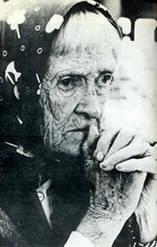
Omm SetyOmm Sety ('mother of Sety') was the name adopted by Dorothy Louise Eady, who became convinced that she was the reincarnation of a priestess at the temple of Sety I at Abydos, Upper Egypt. Although cited by some as clear evidence of reincarnation, are the claims of this rather eccentric English lady any more believable than those of the legions of reincarnated pharaohs, priestesses, Atlantean kings and Amazonian queens that seem to have found new lives in the twentieth and twenty first centuries?

Dorothy Louise Eady was born to Irish parents in a suburb of London in January 1904. According to her own account, at the age of three Dorothy fell down a long flight of stairs and was pronounced dead by the attending doctor. However, an hour later the little girl was sitting up in bed, perfectly recovered. It was from this point onwards that she began to have recurring dreams of being in an ancient building with huge columns, interpreted by her as a temple. When she was four years old her parents took her with them on a visit to the British Museum, and it was here in the Egyptian galleries that the little girl suddenly became aware that she was 'home'. Such was the effect of this realisation on the four year old that she ran madly through the halls, kissing the feet of the ancient statues and eventually sitting down at the feet of a glass-cased mummy and refusing to budge. 

Three years later Dorothy saw a photograph in a magazine showing the 'The Temple of Sety the First at Abydos'  and immediately connected it with the large columned building of her recurring dream. She told her father that the Temple was her home, the place where she had once lived, but was confused as to why the buildings were in ruins and there was no garden.

During her teenage years Dorothy spent every available moment studying Egyptology. This course of study included being taught to interpret hieroglyphics by the legendary Sir Ernest Wallis Budge, Keeper of Egyptian Antiquities at the British Museum.

But it would not be until she was twenty-nine years old, as the wife of an Egyptian student, that Dorothy would travel to Egypt, where she became the first woman ever to work for the Egyptian Antiquities Department. Dorothy had a son from her marriage, whom she named Sety, much to the annoyance of her husband. In keeping with the Egyptian custom of not referring to women by their first name, Dorothy was then known as Omm Sety, 'mother of Sety'. Many years afterwards, in 1956 after her marriage had ended, she finally made her way 'home' to Abydos, where she remained, living in a small peasant house until her death in 1981.

The temple at Abydos, erected by Sety I in the 13th century B.C., was a place of constant devotion for Dorothy. She would remove her shoes before entering and once inside worship the ancient Egyptian gods in the ancient way. It was mainly through her dreams, recorded in detail in her diaries using a form of automatic writing, that she came to believe that she was the reincarnation of a a fourteen-year-old virgin priestess called Bentreshyt, who had lived at the Temple of Abydos during the reign of Sety I.

As described in her diaries, Dorothy believed her main role as Bentreshyt was to play a part in the dramatized rituals of the death and resurrection of the Egyptian god Osiris, held at the Temple. More controversially, Dorothy also claimed that Sety I had fallen in love with her after a chance meeting in the Temple gardens when she had been a young priestess there. The story has a tragic end as the girl discovered she was pregnant after the liaison, and, rather than expose the Pharaoh, she committed suicide.

Temple of Seti I, AbydosDue to her deep knowledge of all things Egyptian, Dorothy became an extremely popular and respected figure at Abydos, socialising, giving tours of the ruins, writing papers, and even treating locals who came to her in the belief she knew the secrets of ancient Egyptian magic and healing. In fact she was a great believer in ancient Egyptian magic and the very real power of the Egyptian gods. Perhaps the most fascinating part of the intriguing story of Omm Sety are the archaeological discoveries at Abydos which were allegedly made based on advice from her 'memories' of her time at the site more than three thousand years before.

Omm Sety's most widely known claim was that there had once existed a garden attached to the ancient Temple of Sety I. Admittedly, the majority of ancient Egyptian temples possessed gardens, but Omm Sety was able to pinpoint the exact place in which to dig for the ruins, and also predicted that there would be a tunnel running underneath the northern part of the Temple, which was proved by subsequent excavation to be the case. Another more spectacular prediction - that underneath the Temple of Sety I there lies a secret vault containing a library of hidden historical and religious records - has yet to be tested by excavation.

Another archaeological claim yet to be verified is one that arose not from Dorothy's own past memories but from a conversation between Bentreshyt and the Pharaoh Sety I. Sety revealed to her that the Osirion, a building at Abydos which Egyptologists believe is the remains of the Cenotaph of Sety I, was not built by him but dates to a much earlier epoch. Sety also stated that the Great Sphinx at Giza also originated long before the accepted date of c2500 B.C. assigned to it by archaeologists, and that rather than representing the likeness of King Khafra as conventionally believed, it was constructed for the ancient Egyptian god Horus.

Omm Sety was an unusual and colourful woman, whose detailed knowledge of Egyptology and ancient Egyptian magical and religious practices was admired by all who met her, including the numerous Egyptologists who worked alongside her at Abydos. Most researchers agree it would have been difficult for her to obtain such a profound knowledge and understanding of ancient Egypt through normal channels of learning. There is no question that Omm Sety believed she was the reincarnation of Bentreshyt, the Temple virgin who had lived at Abydos during the 14th century B.C. Whether this was really the case, or whether Dorothy Eady had access to some kind of reservoir of far memories or impressions from the ancient past for which modern science has no explanation is a question which may never be answered.

Perhaps new light will be shed on the case of Omm Sety as further archaeological discoveries are made at Abydos, or when the unpublished parts of her voluminous diaries finally appear in print

Sources and Further Reading

Cott, J. The Search for Omm Sety. New York, Doubleday, 1987.

Eady, D. L. Omm Sety's Abydos. (Society for the Study of Egyptian Antiquities Publications), Benben Publications, 1983.

James, P. & Thorpe, N. Ancient Mysteries. New York, Ballantine Books, 1999, pp584-598.

Zeini, Hanny El, Dees, C. Omm Sety's Egypt.: A Story of Ancient Mysteries, Secret Lives, and the Lost History of the Pharaohs. Pittsburgh, PA, St. Lynn's Press, 2006.

© Copyright 2007 by Brian Haughton. All Rights Reserved.


Advertising 

Quality Megaphones       Texas Electric Provider       Texas Electric Rates      Online Psychic Reading     megan fox tattoos


  [    Strange Powers & Abilities     |    Psychics     |    Feral Children     |    Poltergeist Stories     |    Weird People    |    Occult People    ]

 [      Home     |      What's New     |      Introduction      |     Bibliography      |     Links     |     Mailing List      |     Send e-mail      ]


COPYRIGHT NOTICE

Except where otherwise indicated all articles on Mysterious People are written by Brian Haughton and may not be copied 
in any format without his express written permission. If you use Mysterious People for research please reference it and its URL 
http://www.mysteriouspeople.com
. All photographs used on this site are believed to be in the public domain unless 
stated otherwise, if there is an error please contact me by email and I will accredit the photograph or remove it from the site. 
Copyright © 2002-2007 Brian Haughton, all rights reserved. Web site design by Brian Haughton, July-November 2002.

